

Last updated:
Hail damage on asphalt shingles
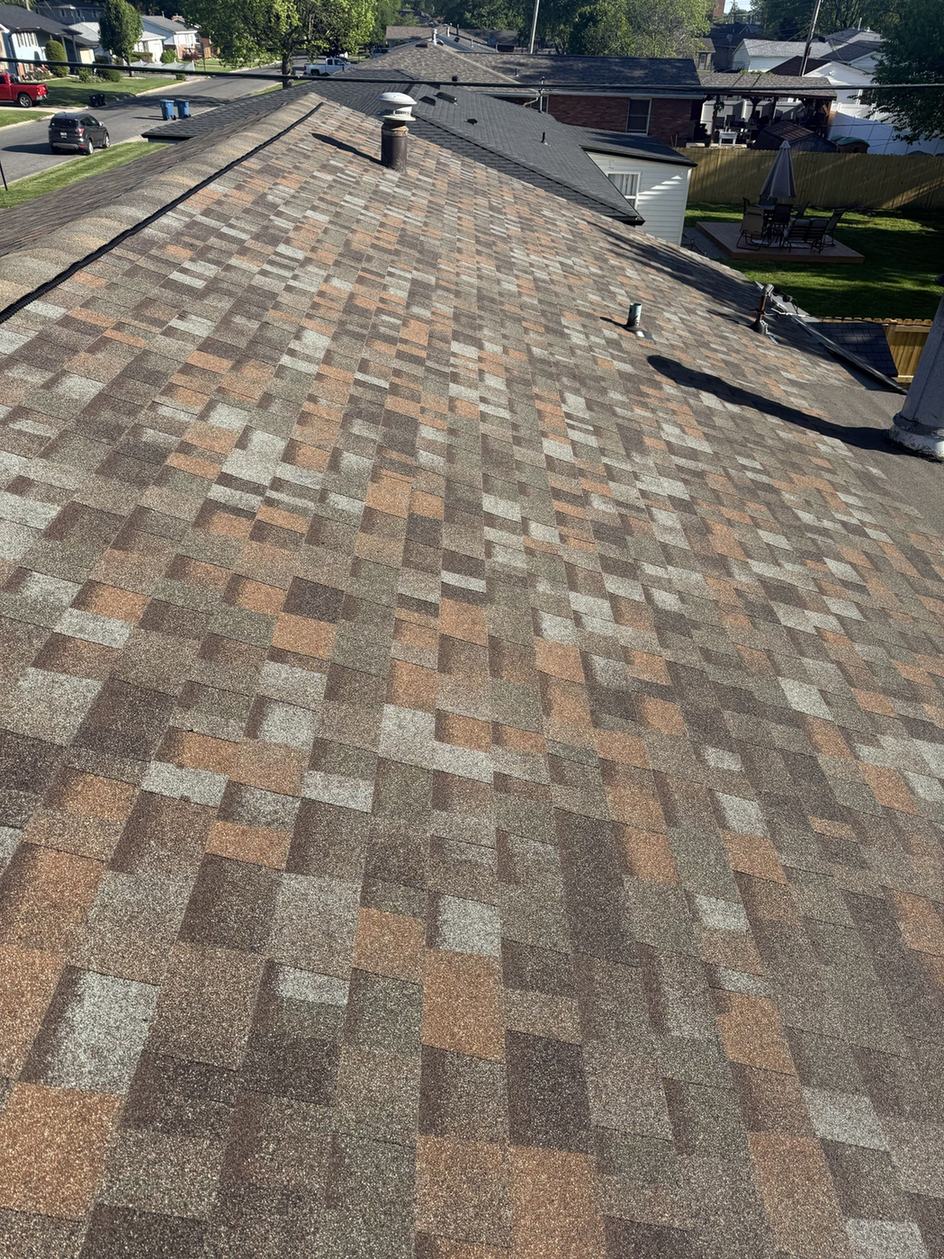
Most homes in Edwardsville, Glen Carbon and the rest of the Metro East have asphalt shingle roofs. When hail hits a shingle, it can knock loose the granules that protect the asphalt from sunlight. What you might see up close:
- Dark spots or bruises where granules are missing, often soft to the touch
- Exposed mat or small cracks around the point of impact
- Random scattered marks rather than a regular pattern, which is more typical of wear
- Granules in gutters and at the bottom of downspouts after the storm
A bruised shingle may not leak straight away, but it can wear out faster and let water in later.
Hail damage on metal roofs
On a metal roof, hail usually leaves round dents in the panels. Many dents only affect how the roof looks. Damage becomes more serious when the coating is chipped or cracked, seams or fasteners are disturbed, or panels are punctured, because that is where water and rust can start.
Hail damage on gutters, vents and flashing
Soft metal parts of the roof often show hail most clearly. Dents in gutters, downspouts, roof vents and flashing can be seen from the ground and help show how widespread the impacts were. Dented flashing or cracked vent collars can also let water in, so they are worth checking even if the shingles look fine.
What size hail causes damage?
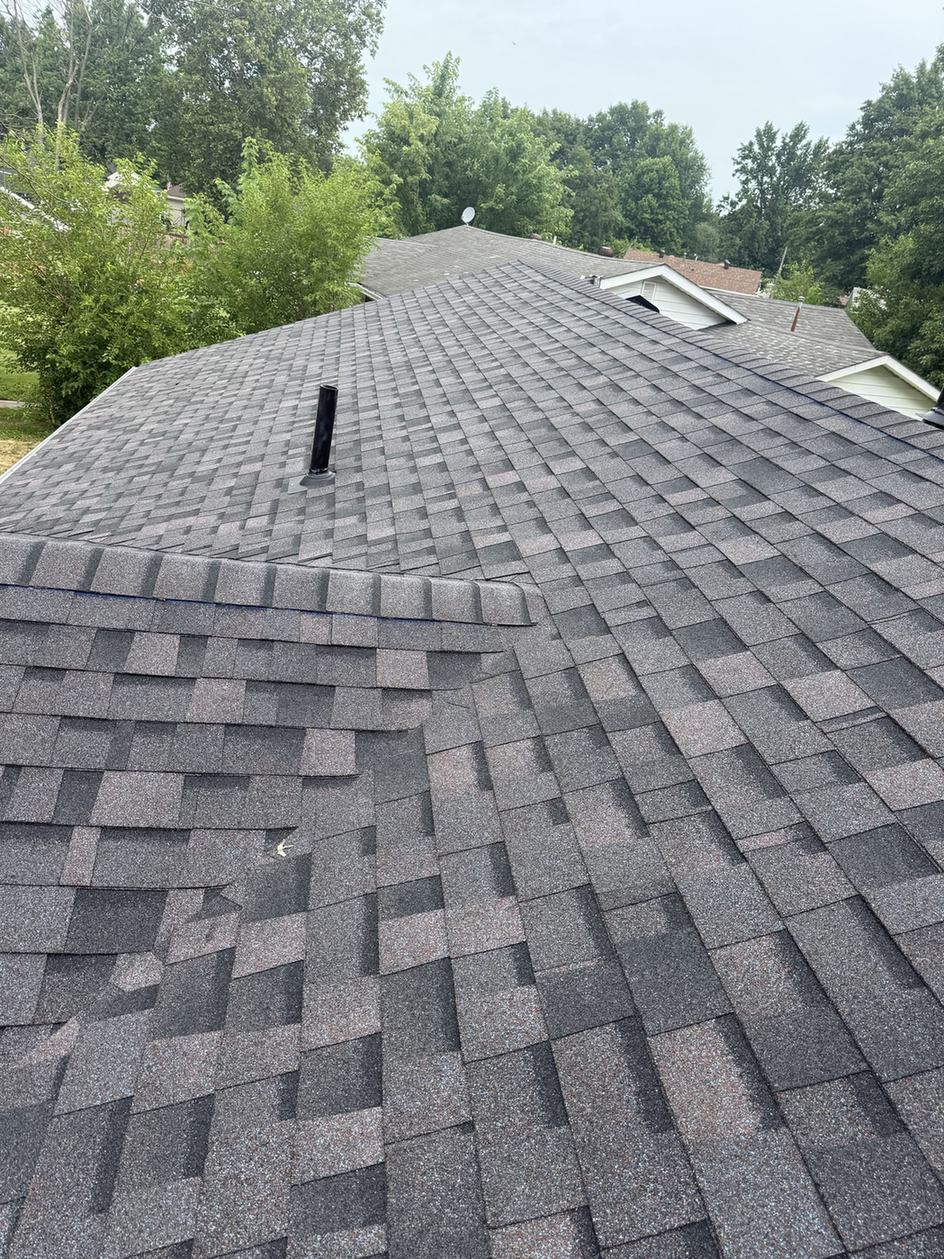
There is no exact cutoff, but some general ranges help. The National Weather Service treats hail 1 inch across (about the size of a quarter) or larger as severe. Hail around that size and larger is more likely to damage asphalt shingles. Smaller hail is less likely to harm a sound shingle roof, but it can still dent gutters and vents and affect older, worn shingles.
Wind matters too. Hail driven sideways hits harder and at an angle, and the age and condition of the roof change how well it holds up.
What to do next
- Stay off the roof. Look from the ground and from windows.
- Take dated photos of dented gutters, vents, siding and any hail you can measure safely.
- Check inside for ceiling stains or damp spots in the attic.
- Book an inspection. A free roof inspection with a photo report shows what the roof looks like up close.
- If water is coming in, call for emergency roof repair and tarping first.
For the repair itself, see storm damage roof repair.
Insurance notes
If you decide to file a claim, we help with the process: we document the damage with photos and provide a repair or replacement estimate you can share with your insurer. Your insurer decides coverage under your policy. We are not public adjusters and cannot guarantee approval. Our guide on insurance and roof replacement explains the usual steps.
Lifetime workmanship warranty on asphalt shingle roofs, transferable to a new owner one time; 10-year workmanship warranty on all other work.